
A Contract for Difference (CFD) is a contract between a buyer and a seller that requires the buyer to pay the seller the difference between the current value of an asset and its value at contract time.
A CFD makes it easy to speculate on price movements without actually buying and selling the underlying asset. Instead of buying a commodity, or shares in a company, or something else, you use the CFD. This also means that CFD:s makes it very easy to speculate on more abstract things, such as the movements of an index.
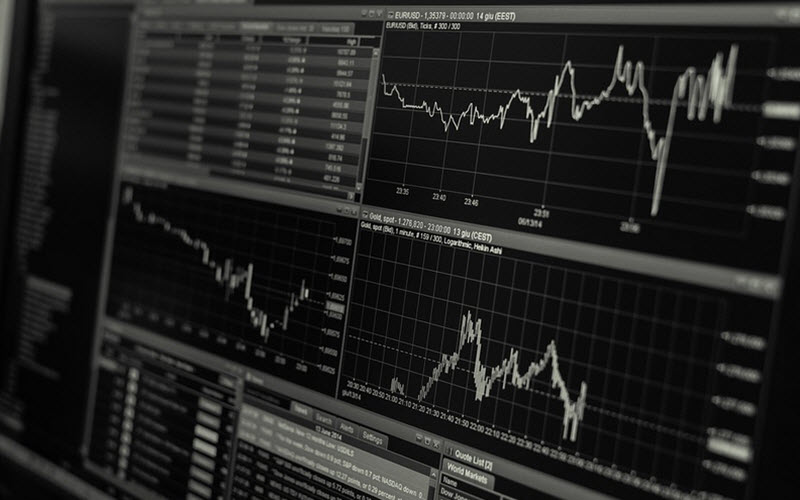
CFD trading
Today, CFD trading is available at a wide range of trading sites online. Many of them are open even to very small-scale retail traders, and does not require a big first deposit to get started with CFD trading.
Contracts for Difference (CFDs): Benefits vs. Drawbacks
Structural risk-reward comparison for retail derivatives traders
| Operational Factor | Key Advantages | Critical Risks & Costs |
|---|---|---|
| Leverage & Margin | High Capital Efficiency: Requires only a small fraction of total position value (typically 3.33%–20%), freeing capital for alternative allocations. | Amplified Loss Velocity: Margin multiplies downside speed equally. Minor market movements can trigger instant margin calls or forced stop-outs. |
| Market Direction | Frictionless Shorting: Open short positions effortlessly to profit from declining prices or hedge underlying equity portfolios without borrowing shares. | Unlimited Upside Exposure: Short trades carry theoretical uncapped loss potential during unexpected earnings spikes, buyouts, or short squeezes. |
| Asset Access | Global Multi-Asset Hub: Trade international equities, indices, commodities, currencies, and bonds from a single account without separate exchange memberships. | No Shareholder Rights: Because CFDs are synthetic price contracts, investors forfeit underlying share ownership, AGM voting rights, and corporate control. |
| Holding Periods | Continuous Rolling: Unlike standardized futures or options contracts, cash CFDs do not expire monthly or require manual roll-forward transactions. | Daily Overnight Financing: Holding leveraged positions past market close accrues daily swap/borrow interest, eroding returns over multi-week or multi-month periods. |
| Trade Sizing | Fractional Position Sizing: Ability to trade micro-contracts and granular unit sizes often unavailable on formal centralized futures exchanges. | Counterparty Execution: Many market-maker brokers run B-book models where customer losses become firm revenue, introducing pricing and execution conflicts. |
| Taxation & Rules | Stamp Duty Exempt: In specific jurisdictions (such as the UK), transactions are exempt from stamp duty because legal title to the physical asset does not change hands. | Regulatory Bans: Strictly prohibited for retail investors in the United States and subject to tight leverage caps under ESMA, FCA, and ASIC consumer protection rules. |
Are CFD:s available for cryptocurrency?
Yes, CFD:s can be used to speculate on a wide range of cryptocurrencies. The underlying currency pair can either be a crypto-crypto pair (e.g. BTC-LTC) or a pair where one currency is crypto and the other a traditional currency (e.g. BTC-USD).
CFD leverage
Most brokers that offer CFD trading also offer margin trading (leveraged trading). When you use leverage, you borrow money from the broker to carry out a deal. Some of the money for the deal comes from your trading account, and the rest is lent to you from the broker.
Many brokers happily offer very high leverage for CFD trading, but in some jurisdictions, this has been curbed by legislation aiming to protect non-professional traders. There are for instance rules within the European Union limiting how high the leverage can be when the trader is non-professional (and rules about who counts as professional).
Instead of actually short-selling
If you have reason to believe that the market price of an asset is about to go down, the traditional way of attempting to profit from this has been short-selling.
One example of short-selling: Amelia borrows 100 Apple shares from her broker and immediately sell them for the current market price, which is 140 USD per share. She gets $140 x 100 = $14,000. She then waits for the market price to go down. When the market price is $110, she buys 100 shares on the open market. She pays $110 x 100 shares = $11,000. She gives the share back to her broker. Her profit is $3,000 (minus any costs).
Amelia is taking a risk here, because what happens if the share price doesn´t drop? Eventually, she will have to buy 100 shares in Apple at any price to give them back to her broker within the stipulated timeframe.
It is easy to understand why many traders prefer to use a CFD to speculate on falling prices. With a CFD, the downside is not unlimited. With a CFD, you can decide beforehand exactly how much money to risk.
CFD:s are available regardless of whether you think the price is going up or down. Just make sure you select the right type of CFD before you hit the button.
Avoiding transfer costs
One of the reasons why CFD:s has become so popular is that this type of speculation does not come with the traditional transfer costs associated with actually transferring ownership of shares or other similar assets. In some jurisdictions, this includes avoiding stamp duty or similar costs.
Not permitted in the United States
A downside with CFDs is that they are not permitted in the United States. This is because of restrictions imposed by the Securities and Exchange Commission on over-the-counter financial instruments.
In the United States, over-the-counter financial instruments are heavily regulated through laws such as the Dodd-Frank Act, which are enforced by the SEC.
In the United States, CFDs are defined as either a swap or securities-based swap, unless otherwise excluded. For more information, see Title Vii of the Dodd-Frank Act.
This article was last updated on: September 14, 2026